Huimin Bhikshu
President of Dharma Drum Institute of Liberal Arts
Emeritus Professor of Taipei National University of the Arts
Published in Vol. 432 of
Humanity Magazine (August 2019)
In No
Ordinary Disruption: The Four Forces Breaking All the Trends, published by
McKinsey Global Institute in 2015, four global forces were reported to break
all the global trends, namely the urbanization of emerging markets,
accelerating impact of technology, aging world population, and rapid flow of
trade, labor, funds, and information. These four forces have formed a new trend
that is enabling 1 billion people worldwide to escape poverty. Three billion people
worldwide are expected to enter the middle class in the next 20 years.
Challenges Brought by Artificial Intelligence
and Aging Societies (Double A)
However, the introduction of artificial
intelligence (AI), which is part of technological advancement, will pose a
massive challenge to society. In 2013, the researchers Carl Benedikt Frey and
Michael A. Osborne of Oxford University published The
Future of Employment: How Susceptible Are Jobs to Computerisation, in which they stated that the probability
of 47% of jobs in the United States being replaced by emerging computer
technology in the next 20 years is higher than 70%.
Dr. Tomohiro Inoue of the Department of
Economics at Komazawa University, who published The Future of Artificial Intelligence and Economy in 2016, reported
that artificial general intelligence (AGI) may be realized by 2030 and be able to
complete various intellectual tasks, having a dramatic impact on society and
economies. Unlike narrow AI—which has been applied in image and speech
recognition, self-driving vehicles, and chess—AGI will be capable of reasoning
and have universal intelligence; it will autonomously learn in all fields of
knowledge, increasing its own knowledge base for problem solving. Accordingly, Dr.
Inoue predicted that Japan will become a society in which only 10% of citizens are
employed. In 2015, 64 million people in Japan were in employment, constituting
half of the country’s population. In particular, 20 million people were
employed in professions that cannot currently be replaced by computer
technology, namely those involving creativity, management, and hospitality.
However, these professions may be replaced by AGI at certain levels; therefore,
only 10 million people in Japan may be employed in future. This would further
widen the income gap between the richest and poorest. According to Dr. Inoue,
universal basic income (BI) should be implemented to provide all people with financial
stability.
In 2016, Professors Lynda Gratton and Andrew Scott
of the London Business School published The 100-Year
Life: Living and Working in an Age of Longevity, which received much acclaim for outlining
the future challenges and opportunities for individuals, enterprises, and
governments through the statement that approximately half of the children born
in 2007 would live until 100 years old. In 2018, Commentator Takeda of NHK (the
Japan Broadcasting Corporation) analyzed the topic “What are the work-support
policies in an era of people over 100 years old?” as follows. According to estimations
by the national institutions of Japan, by 2065, the average lifespan will be
91.35 and 84.95 years for women and men, respectively, and 547,000 people will
be aged 100 years or older (over 67,000 in 2017). Accordingly, after retiring
at 65, an individual will have 35 years of life left, and maintaining the daily
living and work of people at this age is a problem that must urgently be
discussed. According to the example of Finland, Takeda suggested that BI be
implemented as a solution.
Responses through Basic Income and Basic Lifestyles (Double
B)
BI, also known as unconditional basic income,
refers to a periodic cash payment delivered to all on an individual basis
(citizens, local residents, and members of a group) without conditional or
qualification restrictions. BI is distributed to all people by government or
organizations to ensure their financial stability. Opponents to BI have argued
that it will reduce the incentive for people to work and exacerbate the financial
burdens on countries. Proponents have contended that BI can integrate various
social welfare policies such as childcare, unemployment, and disability
allowances and pensions through the adjustment of the tax system (e.g., high
income tax on AI-using businesses) as well as save the administrative cost of
fraud inspection. BI provides people with a basic living allowance, mitigating
the vicious cycle of poverty trap and relieving economic pressure. People can
then work in their preferred profession, reducing the likelihood of their being
forced into jobs with poor working conditions or illegal jobs.
Some countries have implemented BI. From 1974 to
1979, Canada distributed approximately US$500 to 10,000 residents each month.
Subsequently, studies indicated that this BI reduced the likelihood that men would
discontinue their studies, enabled women to increase the length of their
maternity leave, and improved people’s physical and psychological health (e.g.,
less drug abuse, domestic violence, drunk driving, hospital visits, and medical
costs). In 2011, with financial aid provided by international organizations
such as the United Nations, India provided approximately US$4 per month to approximately
6,460 residents in nine villages for 18 months. This substantially increased
the residents’ savings, health condition, and school and work attendance rates
as well as improved their nutritional status.
Accordingly, we suggest that the challenges
brought by AI and aging societies can be effectively answered in the long term through
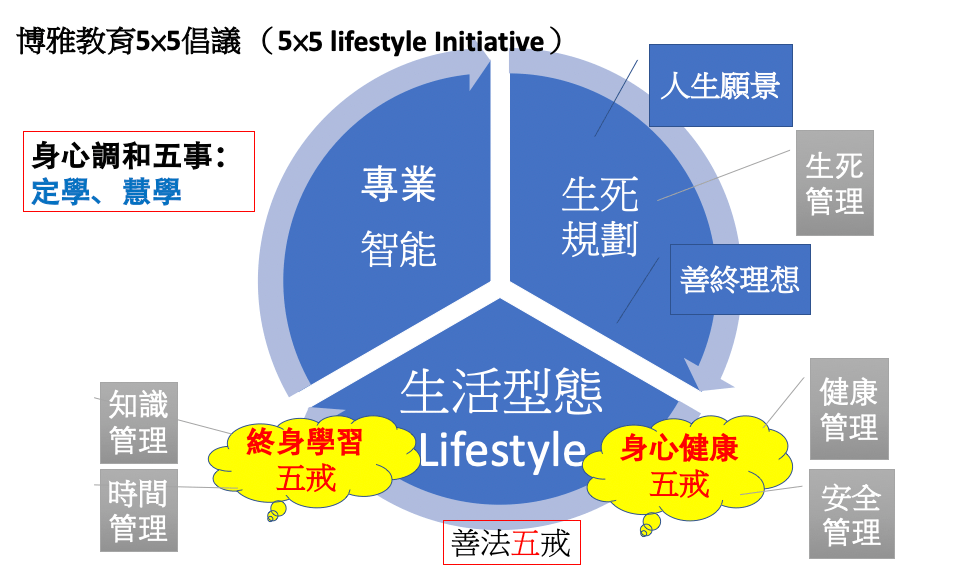
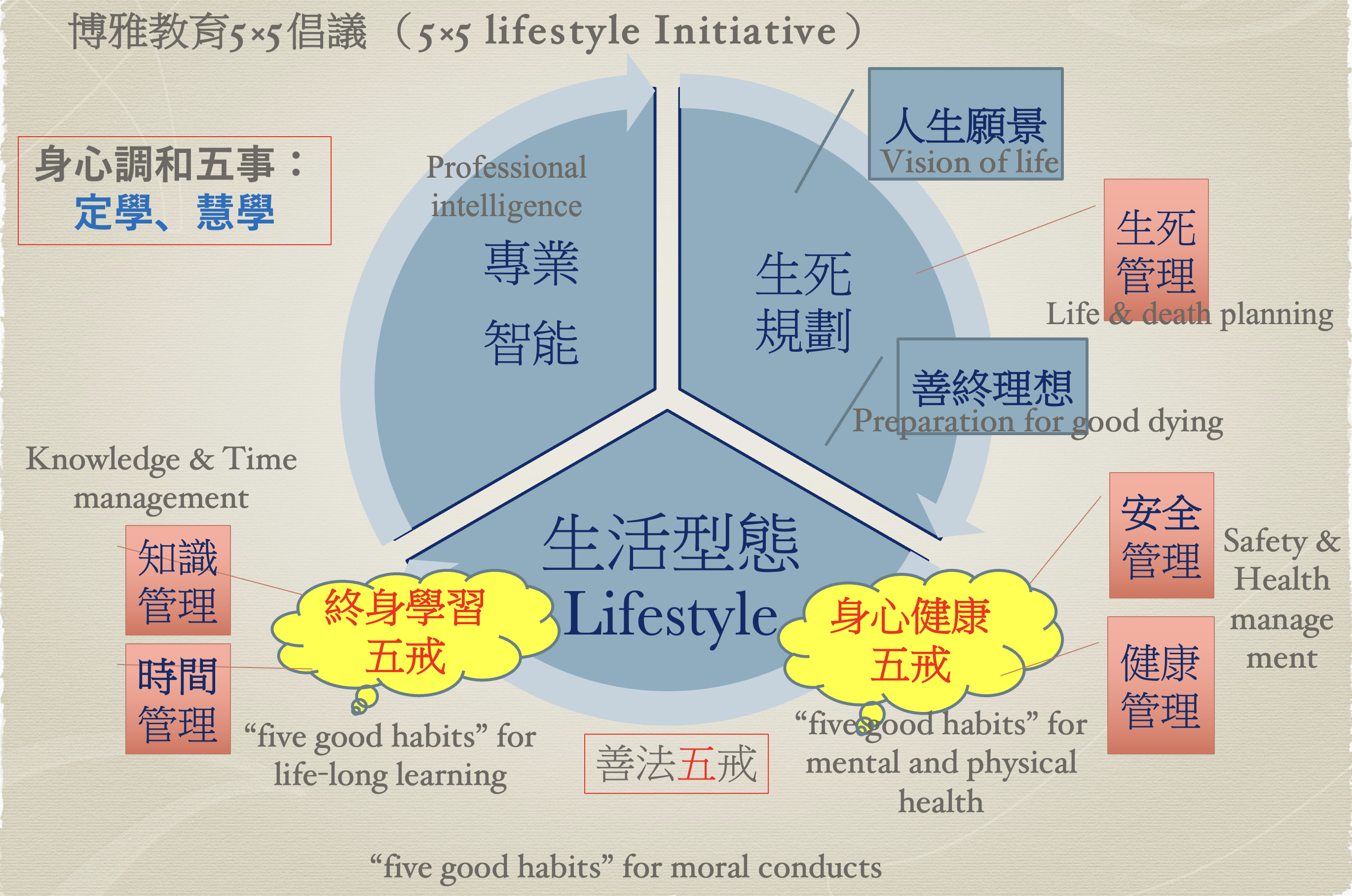
BI and adoption of basic lifestyles. Basic physical and intelligent lifestyles
can be maintained by practicing the five principles of physical and
psychological well-being (smiling, tooth-brushing, exercising, eating rightly,
and sleeping well) as well as the five principles of lifelong learning
(reading, recording, researching, publishing, and implementing). Doing so will
mitigate the economic burden on individuals and societies, improve people’s
physical fitness and intelligence, and enhance people’s quality of life and
civic literacy. Such is the basic principle of building an ideal society.